


Our Services > Affordable Dental Implants
Affordable Dental Implants Near Me: The Complete 2026 Guide for Round Lake Beach & Grayslake, IL
If you're missing one or more teeth, you've probably already discovered that "dental implants" and "affordable" don't always seem to go together. Between conflicting price quotes, confusing insurance language, and a dozen different implant types, it's easy to feel overwhelmed before you've even scheduled a consultation.
The truth is that affordable dental implants are available — you just need to understand what drives the cost, which options fit your budget, and how to find a dentist who will build a treatment plan around your needs rather than a one-size-fits-all price tag. At Avon Dental, serving Round Lake Beach and Grayslake, Illinois, our implant dentistry team has helped patients throughout Lake County restore missing teeth with a personalized, transparent approach to pricing, insurance, and financing.
This guide covers everything you need to know about affordable dental implants: what they are, how much they cost, what affects that cost, how insurance and financing work, how implants compare to dentures and bridges, and how to find a qualified, trustworthy implant dentist near you.
What Is a Dental Implant?
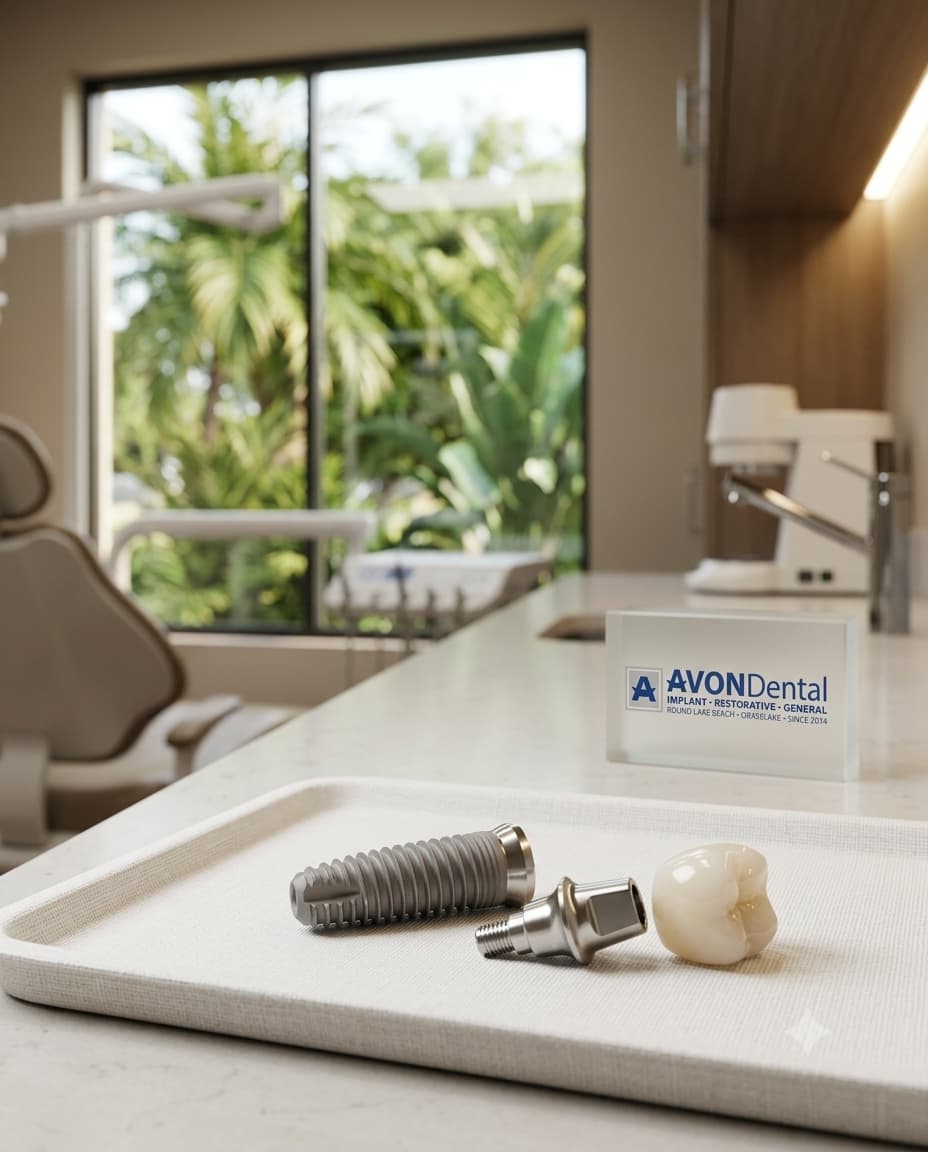
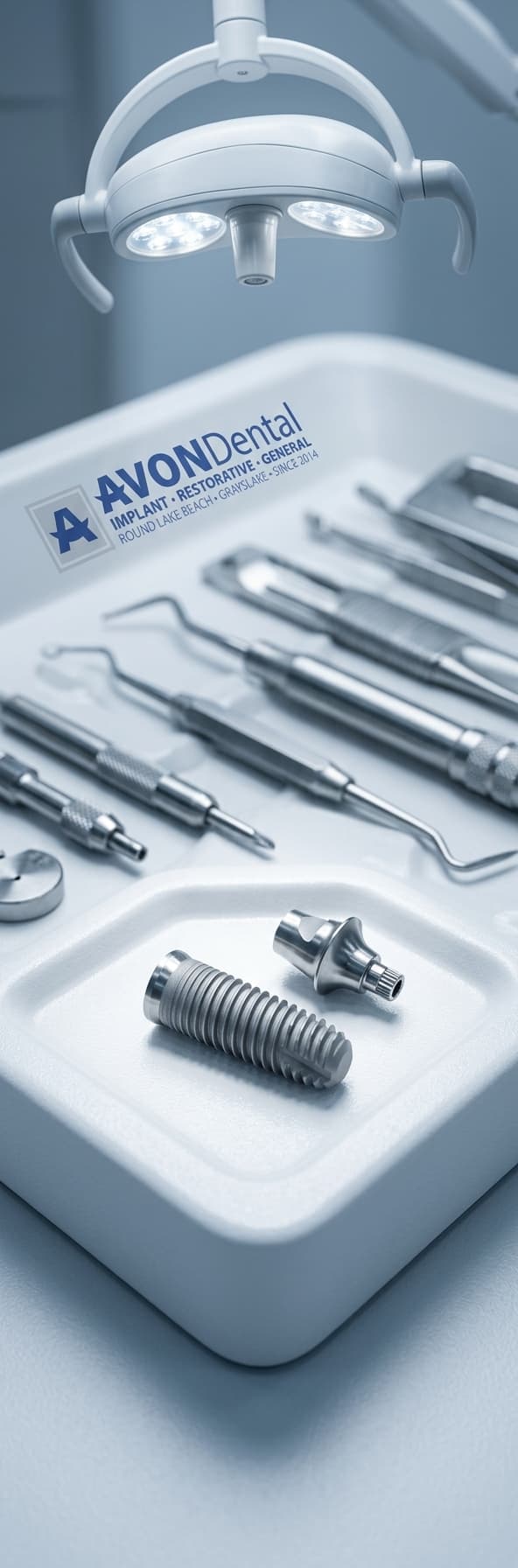
A dental implant is an artificial tooth root, typically made of titanium, that's surgically placed into the jawbone to replace a missing tooth. Over several months, the implant fuses with the surrounding bone through a biological process called osseointegration, creating a stable, permanent foundation. Once healed, the implant is topped with an abutment (a small connector piece) and a custom porcelain crown, bridge, or denture — depending on how many teeth need to be replaced.
Because implants replace both the root and the visible tooth, they're considered the modern standard of care for tooth replacement. Unlike removable dentures or traditional bridges, dental implants stimulate the jawbone the same way natural tooth roots do, helping to prevent the bone loss and facial changes that often follow tooth loss.
The Parts of a Dental Implant
Understanding the three components of a dental implant helps explain where the cost comes from:
- The implant post (fixture): A biocompatible titanium (or, less commonly, zirconia) screw that's surgically placed into the jawbone and acts as the artificial tooth root.
- The abutment: A connector piece attached to the implant post after osseointegration, which anchors the visible restoration.
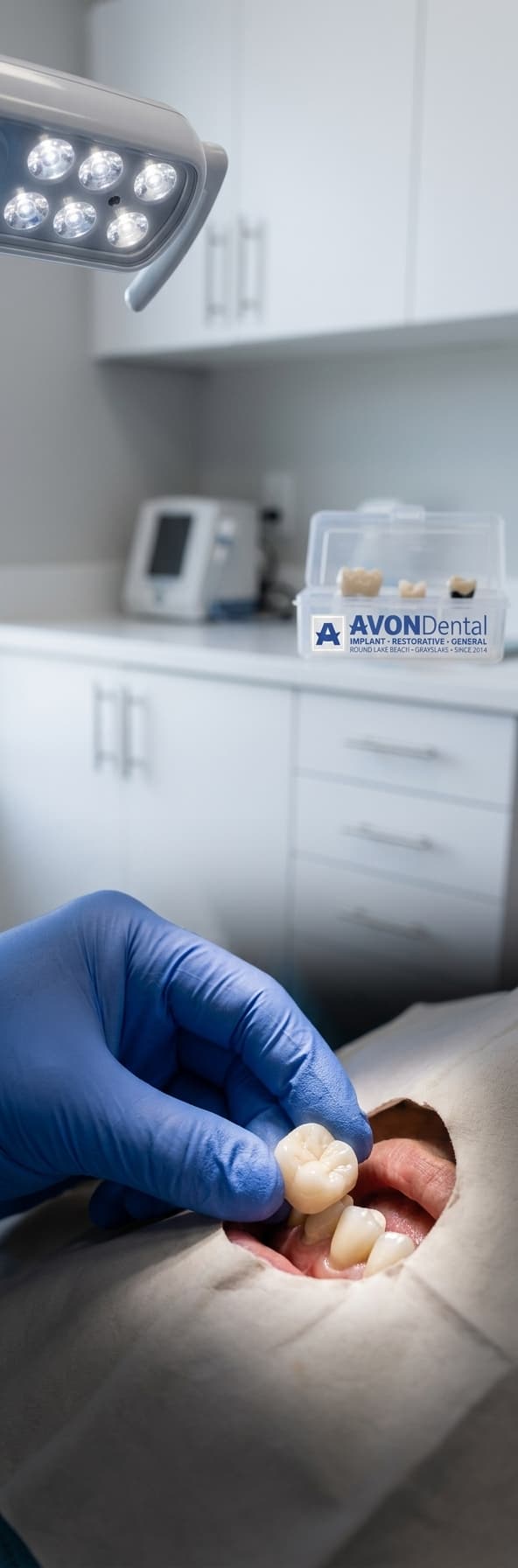
- The crown, bridge, or denture: The custom-made, tooth-colored prosthetic that attaches to the abutment and is visible above the gumline.
Types of Dental Implants
Not every patient needs the same implant solution. Matching the right type of implant to your specific situation is one of the most effective ways to keep treatment affordable.
Endosteal Implants
Endosteal implants are the most common type of dental implant, placed directly into the jawbone. They're suitable for most patients with adequate bone density and form the foundation for single-tooth implants, implant-supported bridges, and full-arch restorations.
Subperiosteal Implants
Subperiosteal implants rest on top of the jawbone, under the gum tissue, rather than being inserted into the bone itself. This option is less common but can be useful for patients who don't have enough healthy jawbone for traditional implants and want to avoid extensive bone grafting.
Single-Tooth Implants
A single-tooth implant replaces one missing tooth without impacting the health of the neighboring teeth — a key advantage over a traditional bridge, which requires reshaping adjacent teeth for support.
Implant-Supported Bridges
When several teeth in a row are missing, an implant-supported bridge uses two or more implants as anchors to support a bridge of replacement teeth, avoiding the need for an individual implant at every missing tooth site.
Implant-Supported Dentures (Overdentures)
Implant-supported dentures combine the affordability of traditional dentures with the stability of dental implants. A small number of implants (often two to four) are placed to anchor a removable or fixed denture, dramatically improving retention, comfort, and chewing function compared to conventional dentures.
All-on-4 and All-on-X Full-Arch Implants
For patients missing most or all of their teeth in an arch, All-on-4 (or All-on-X, using more implants for additional support) uses as few as four strategically placed implants to support a full arch of fixed, permanent replacement teeth. This approach is often more affordable than replacing every single tooth individually, while still delivering the stability and function of traditional implants.
Mini Dental Implants
Mini dental implants are narrower in diameter than standard implants (roughly 1.8–3.3mm versus 4–6mm) and are typically used to stabilize lower dentures or replace smaller teeth in narrow spaces. Because they require less invasive surgery and often avoid the need for bone grafting, mini implants can cost roughly half the price of a traditional implant — though they aren't suitable for every case.
How Much Do Dental Implants Cost?
This is the question nearly every patient asks first, and it's also the hardest to answer with a single number — because implant pricing depends heavily on your specific case. That said, here's a realistic breakdown based on typical costs across the greater Chicago and Northern Illinois area.
Single Tooth Implant Cost Breakdown
|
Component |
Typical Cost Range |
|
Implant post (surgical placement) |
$1,500 – $2,500 |
|
Abutment |
$300 – $1,000 |
|
Custom crown |
$1,000 – $2,000 |
|
Imaging & diagnostics (X-rays, 3D scans) |
$100 – $500 |
|
Total single tooth implant |
$3,000 – $6,000 |
Some practices advertise dramatically lower starting prices — sometimes as low as $500 to $2,800 for implant placement alone — but it's important to understand what's actually included. A quoted "implant price" sometimes covers only the surgical placement of the post, with the abutment and crown billed separately. Always ask for an itemized treatment plan so you understand the full, all-in cost before committing.
Full-Mouth and Full-Arch Implant Costs
Replacing an entire arch of teeth is a bigger investment, but often more cost-effective per tooth than replacing each one individually:
|
Treatment Option |
Typical Cost (per arch) |
|
Implant-supported denture (overdenture) |
$15,000 – $24,000 |
|
All-on-4 implants |
$24,000 – $28,000 |
|
All-on-6 implants |
$28,000 – $35,000 |
|
Full mouth, individual implants for every tooth |
$35,000 – $50,000+ |
What Affects the Cost of Dental Implants?
Several variables influence your final price, which is why an in-person consultation and 3D imaging are essential before you can get an accurate quote:
- Number of teeth being replaced. A single implant costs far less than a full-arch restoration, but full-arch solutions like All-on-4 often cost less per tooth than replacing every tooth individually.
- Need for bone grafting or a sinus lift. Patients who have experienced bone loss from long-term tooth loss, gum disease, or denture wear may need supplemental bone grafting ($400–$3,000) before an implant can be placed.
- Tooth extractions. If the damaged tooth hasn't already been removed, extraction costs ($200–$500 per tooth) are typically added to the treatment plan.
- Implant material and brand. Premium implant systems and zirconia implants generally cost more than standard titanium options.
- Location of the missing tooth. Front teeth often require more precise, aesthetically demanding work than molars, which can affect price.
- Dentist and specialist experience. Oral surgeons, periodontists, and prosthodontists with advanced implant training may charge more than a general dentist, though many general dentists — including experienced implant dentists — offer excellent outcomes at a lower cost.
- Technology used. Computer-guided implant placement and digital treatment planning can add to the upfront cost but often improve precision and long-term success rates.
What's the Cheapest Way to Get Dental Implants?
If cost is your primary concern, there are several legitimate strategies for reducing what you pay out of pocket without sacrificing quality or safety.
1. Compare Multiple Providers
Implant pricing can vary significantly between practices in the same area. Request an itemized treatment plan from more than one dentist so you're comparing complete costs — not just the advertised starting price.
2. Ask About In-House Payment Plans
Many dental practices, including Avon Dental, offer flexible in-house payment plans that let you spread the total cost of treatment over several months, often with little or no interest for shorter terms.
3. Use Third-Party Financing
Healthcare credit options like CareCredit offer promotional interest-free periods (typically 6–24 months), allowing you to break a large treatment cost into manageable monthly payments.
4. Consider a Dental Discount or Membership Plan
For patients without dental insurance, in-office membership or discount plans can provide 20–50% savings on procedures like implants for a modest annual or monthly fee — without the waiting periods or annual maximums of traditional insurance.
5. Choose an Implant-Supported Denture Instead of Full Individual Implants
If you're missing most or all of your teeth in an arch, an implant-supported denture or All-on-4 solution can restore full function and stability using far fewer implants than replacing every tooth individually — significantly lowering the total cost.
6. Ask About Bundled or Multi-Implant Discounts
Some practices offer reduced per-tooth pricing when multiple implants are placed in the same treatment plan.
7. Consider Mini Dental Implants (If You're a Candidate)
For patients stabilizing a lower denture or replacing a smaller tooth, mini implants can cost roughly half of a traditional implant, though your dentist will need to confirm you're a good candidate.
8. Pay in Full or with Cash
Some practices offer a modest discount (often 5–10%) for patients who pay a larger portion of treatment upfront in cash rather than financing the full amount.
9. Look Into a Dental School Clinic
Teaching institutions such as the University of Illinois at Chicago College of Dentistry offer implant treatment performed by supervised students or residents at a significantly reduced cost — often 30–50% below private practice rates. The trade-off is a longer treatment timeline, with more frequent appointments and extended review at each stage.
A word of caution on ultra-low-cost advertising: prices that sound too good to be true — such as dental tourism packages or heavily discounted "implant special" ads — deserve extra scrutiny. Ask what's included, who is performing the procedure, what warranty is offered, and how follow-up care is handled before committing to the lowest bidder.
How Technology Helps Make Implant Treatment More Predictable
Modern implant dentistry relies on far more precise tools than the profession had even a decade ago, and that precision often translates into fewer complications, shorter healing times, and, ultimately, more predictable costs.
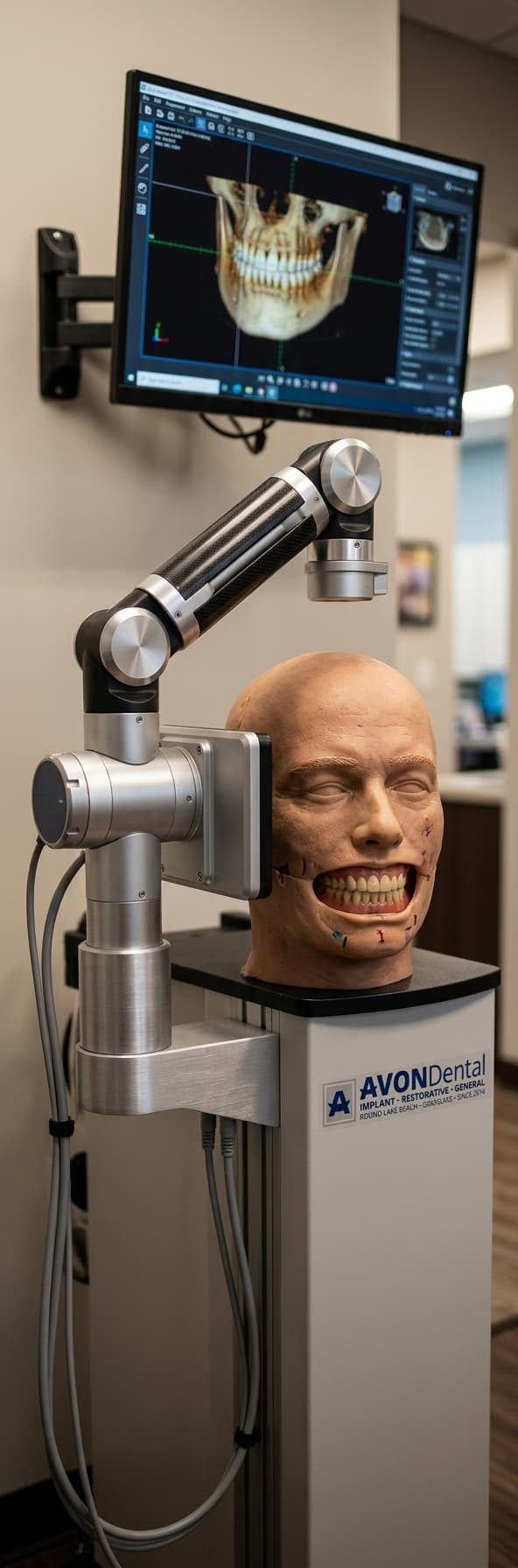
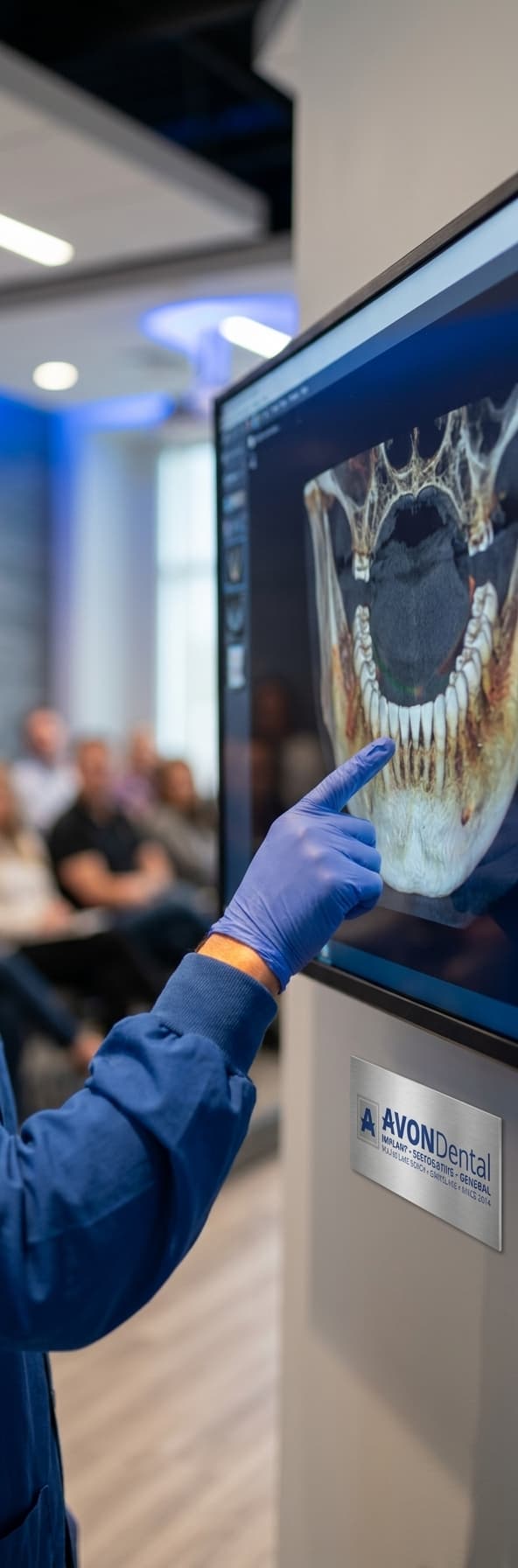
3D Cone Beam CT (CBCT) imaging captures a detailed, three-dimensional view of your jawbone, sinus cavities, and nerve pathways before treatment even begins. This allows your implant dentist to plan the exact size, angle, and position of each implant with a level of accuracy that traditional 2D X-rays simply can't match — reducing the risk of complications and unexpected costs mid-treatment.
Computer-guided implant placement uses your 3D scan to create a surgical guide, essentially a custom template that directs the placement of each implant with sub-millimeter precision. While this technology can add a modest fee to the treatment plan, it often improves accuracy enough to reduce chair time, minimize invasiveness, and improve long-term success rates.
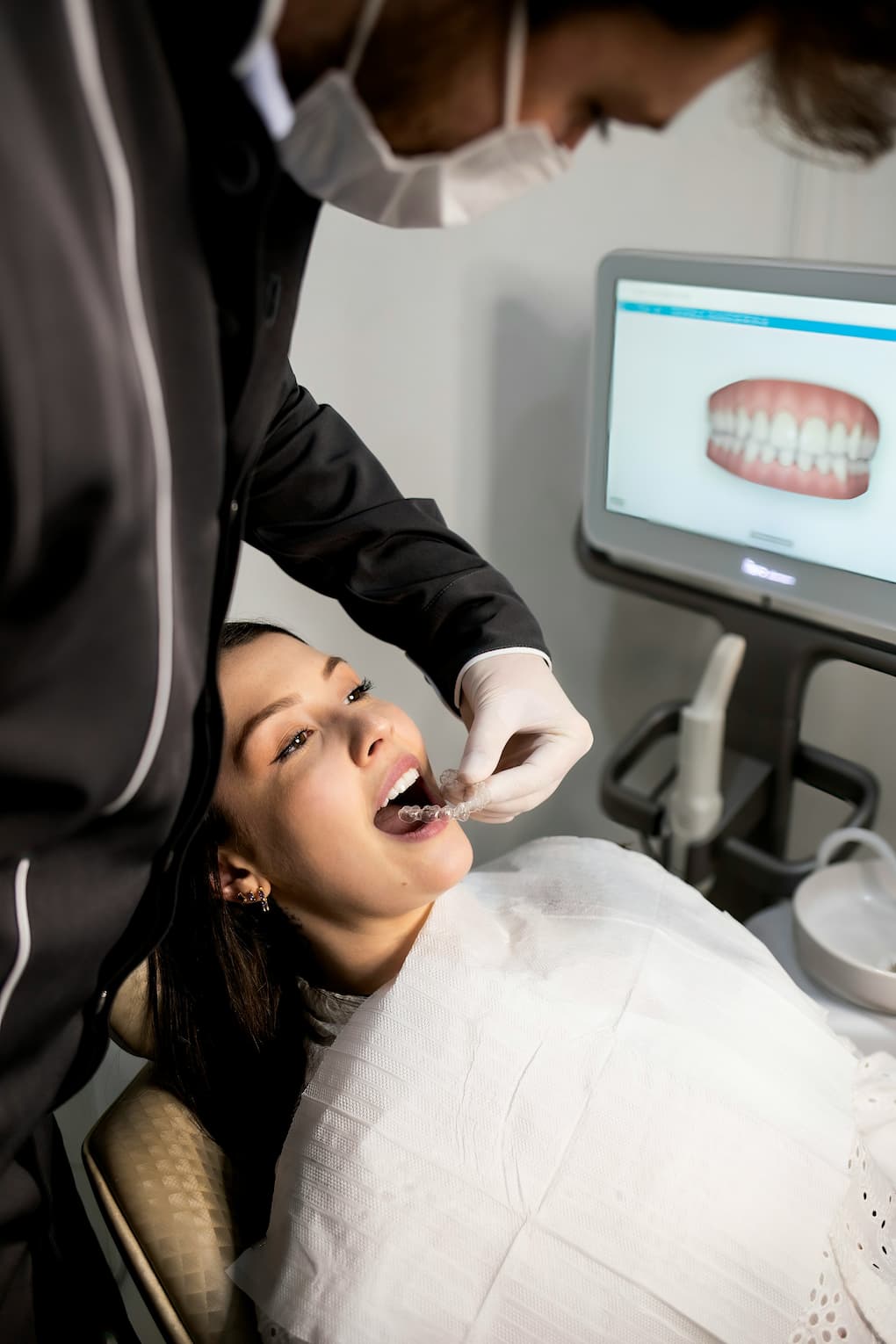
Digital impressions and intraoral scanners have also replaced messy, old-fashioned putty molds for many patients, making the restorative phase of implant treatment faster and more comfortable, with highly accurate results for the final crown, bridge, or denture.
Together, these technologies help implant dentists reduce the guesswork that used to drive up costs through complications, redos, or ill-fitting restorations — one more reason working with a well-equipped, experienced provider can actually save you money over the life of your treatment.
Common Myths About Affordable Dental Implants
Misinformation is one of the biggest reasons patients delay treatment or overpay. Here are a few of the most common myths worth clearing up.
Myth: "Affordable implants must mean lower quality." Cost differences between providers are usually driven by overhead, location, technology, and business model — not necessarily the quality of the implant itself. Many practices are able to offer competitive pricing through efficient scheduling, bulk purchasing of implant materials, or in-house lab work, without cutting corners on the implant components or the dentist's skill.
Myth: "I need to replace every missing tooth with its own implant." For patients missing several teeth, solutions like implant-supported bridges, implant-supported dentures, or All-on-4 restorations can restore full function using far fewer implants — often at a significantly lower total cost than replacing each tooth individually.
Myth: "Dental implants are too expensive to ever be worth it." When you compare the total lifetime cost of implants against the repeated replacements, relines, and adjustments required by bridges and dentures, implants are frequently the more cost-effective option over 15–20 years, in addition to offering superior comfort and function.
Myth: "I'm too old for dental implants." Age alone rarely disqualifies a patient from implant treatment. What matters most is bone density, gum health, and overall medical stability — all of which your dentist will evaluate during your consultation, regardless of your age.
Myth: "Dental implant surgery is extremely painful." Most patients report that the discomfort following implant placement is milder than expected, often comparable to or less intense than a tooth extraction, and manageable with over-the-counter pain relief.
The Life-Changing Benefits of Restoring Missing Teeth
Beyond the cosmetic improvement, replacing missing teeth with dental implants delivers benefits that touch nearly every part of daily life.
Improved nutrition and digestion. Missing teeth make it harder to chew a wide variety of foods, often pushing patients toward softer, less nutritious diets. Dental implants restore up to 90-95% of natural chewing force, making it easier to enjoy a full, balanced diet.
Clearer speech. Gaps from missing teeth — especially front teeth — can affect pronunciation and cause a noticeable lisp or whistle. Implants restore the structure needed for clear, confident speech.
Preserved facial structure. When a tooth is lost, the jawbone beneath it begins to resorb (shrink) without the stimulation a natural tooth root once provided. Over time, this bone loss can cause the face to appear sunken or prematurely aged. Because implants replace the tooth root itself, they help preserve the jawbone and, by extension, your natural facial contours.
Protection for neighboring teeth. Unlike a traditional bridge, which requires reshaping the healthy teeth on either side of a gap, an implant stands independently — meaning your remaining natural teeth are left untouched and undamaged.
Renewed confidence. Many patients describe a noticeable boost in self-confidence after completing implant treatment, feeling comfortable smiling, laughing, and speaking in social and professional settings without worrying about a visible gap.
Cost Considerations by Tooth Location
Where in your mouth a tooth is missing can influence both the complexity and the price of your implant treatment.
Front teeth (incisors and canines): Because front teeth are highly visible, achieving a natural-looking result requires precise color matching, shaping, and gum contouring. Front-tooth implants can sometimes cost slightly more due to this aesthetic precision, even though the surgical placement itself may be similar to other areas.
Back teeth (premolars and molars): Molars bear significantly more chewing force, so the implant and crown must be engineered for strength and durability. Back-tooth sites are also more prone to bone loss after extraction, which can increase the likelihood of needing a bone graft.
Upper jaw vs. lower jaw: Upper jaw implants, particularly toward the back of the mouth, are sometimes more complex due to the proximity of the sinus cavities, occasionally requiring a sinus lift procedure. Lower jaw implants generally benefit from denser bone, which can make treatment slightly more straightforward.
Understanding these nuances helps explain why two patients can receive very different price quotes for what sounds like the "same" procedure — the location and condition of the missing tooth matters just as much as the type of implant used.
Serving Round Lake Beach, Grayslake & the Surrounding Lake County Community
Avon Dental is proud to provide affordable dental implant care to patients throughout Round Lake Beach, Grayslake, Round Lake, Round Lake Heights, Round Lake Park, Lindenhurst, Fox Lake, Mundelein, Libertyville, Wauconda, and the surrounding Lake County, Illinois communities. Our two convenient office locations make it easy to schedule a consultation, follow-up visits, and routine care close to home, without the added time and expense of traveling into downtown Chicago for quality implant dentistry.
We know that choosing to invest in dental implants is a big decision, and our team is committed to making that decision easier by offering clear, honest pricing information from your very first visit — no surprise fees, no pressure, and no guesswork about what your treatment will actually cost.
Does Dental Insurance Cover Dental Implants?
Insurance coverage for dental implants has improved over the years, but it still varies significantly by plan.
- Most basic dental insurance plans provide limited or no coverage for implants, since they're historically classified as an elective or cosmetic procedure.
- Some PPO plans offer partial coverage, often 20–50% of the procedure, subject to an annual maximum benefit (commonly $1,000–$3,000).
- Medically necessary cases may qualify for coverage. If a tooth was lost due to an accident, injury, or a condition requiring extraction, part of your treatment — such as the extraction, bone graft, or crown — may be covered even if the implant fixture itself isn't.
- Routine portions of treatment are often covered. Your consultation, exam, and X-rays are frequently included under standard preventive benefits, even when the implant procedure itself is not.
- Waiting periods may apply. Many plans require members to be enrolled for 6–12 months before major restorative procedures like implants are eligible for coverage.
Because implant coverage is so plan-specific, the best first step is to request a pre-treatment estimate. Your dental office submits your treatment plan and procedure codes to your insurance company, which then provides a written estimate of what will and won't be covered — typically within two to four weeks.
Using HSA or FSA Funds
If your dental insurance doesn't cover implants, a Health Savings Account (HSA) or Flexible Spending Account (FSA) can often be used to pay for treatment with pre-tax dollars, effectively reducing your overall cost.
Financing Options for Affordable Dental Implants
Even without full insurance coverage, most patients can find a financing path that fits their budget:
- In-house payment plans — many dental offices, including Avon Dental, allow you to spread the cost of treatment directly through the practice, often over 3–12 months.
- CareCredit and similar medical credit cards — offer promotional 0% interest periods, though it's important to pay off the balance before the promotional period ends to avoid retroactive interest charges.
- Personal loans — for larger cases, such as full-arch restorations, a personal loan from a bank or credit union may offer a lower fixed interest rate than a medical credit card, particularly for patients with strong credit.
- Dental discount and membership plans — a lower-cost alternative to traditional insurance that provides ongoing discounts on implant treatment and preventive care.
At your consultation, don't hesitate to ask directly: "What financing or payment plan options do you offer for dental implants?" A trustworthy dental office will walk you through every available option so you can choose what fits your budget.
The Dental Implant Process: What to Expect
Getting a dental implant is a multi-stage process that unfolds over several months, but each phase is designed to maximize long-term success.
Stage 1: Consultation & Treatment Planning
Your implant journey starts with a comprehensive evaluation, including a review of your dental and medical history, a clinical exam, and detailed imaging. Many practices, including Avon Dental, use 3D cone beam (CBCT) scanning to map the soft tissue, bone density, and nerve pathways in the treatment area. This detailed imaging allows your dentist to determine exactly how many implants you need and whether any preparatory procedures — like extractions or bone grafting — are required.
Stage 2: Preparatory Procedures (If Needed)
If a damaged tooth is still present, it will need to be extracted before implant placement. Patients with insufficient jawbone density may require bone grafting or a sinus lift to build a stable foundation for the implant. These preparatory steps can add several months to the overall timeline but are essential for long-term implant success.
Stage 3: Implant Placement
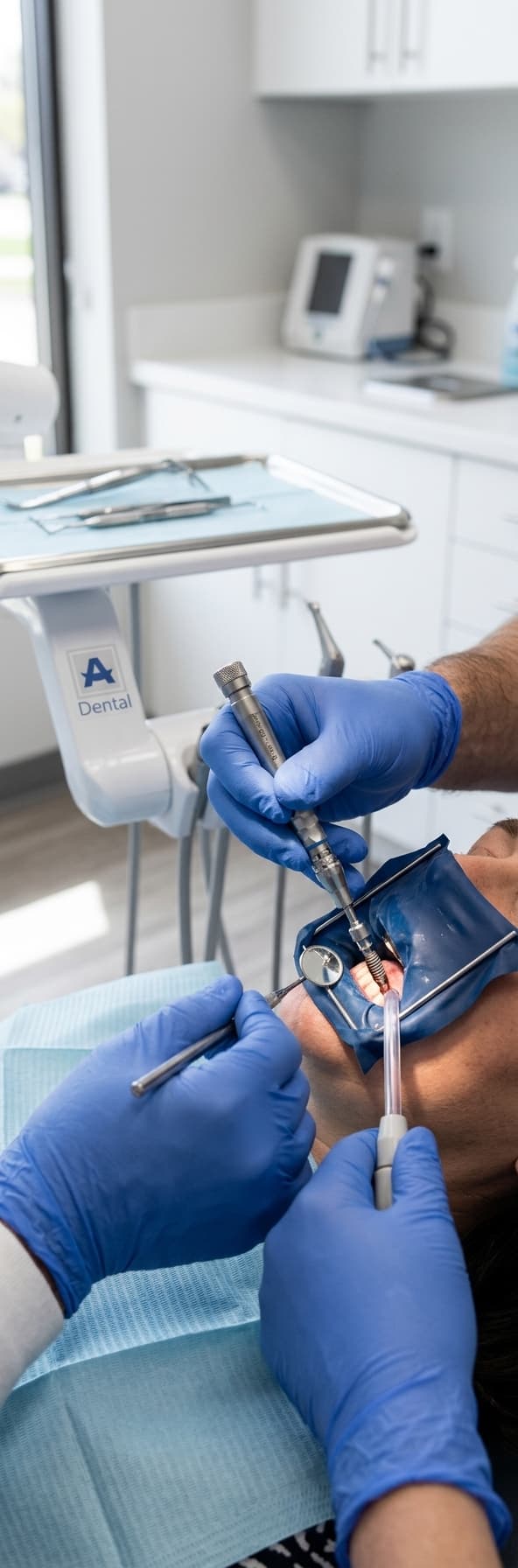
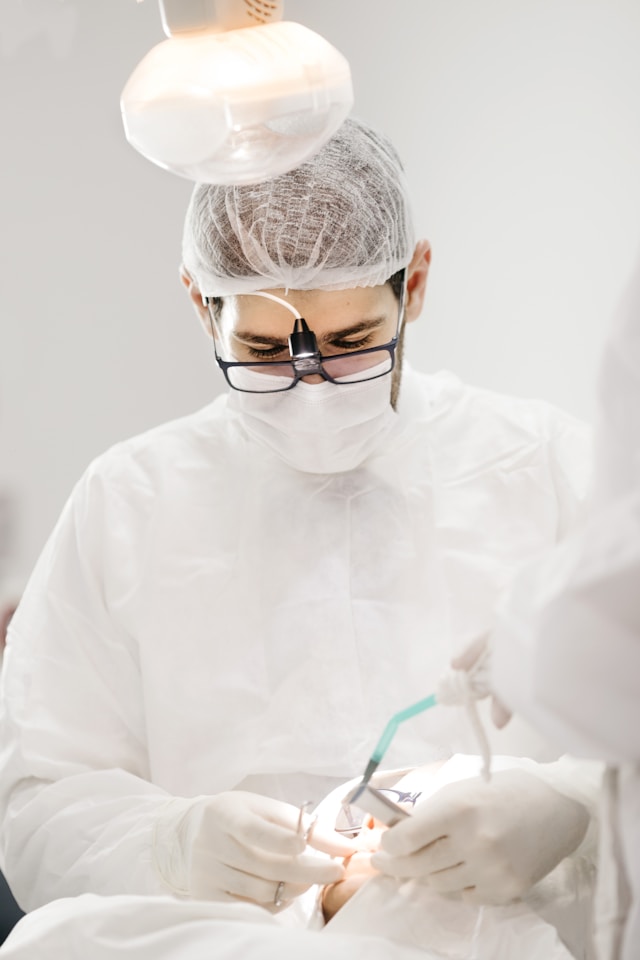
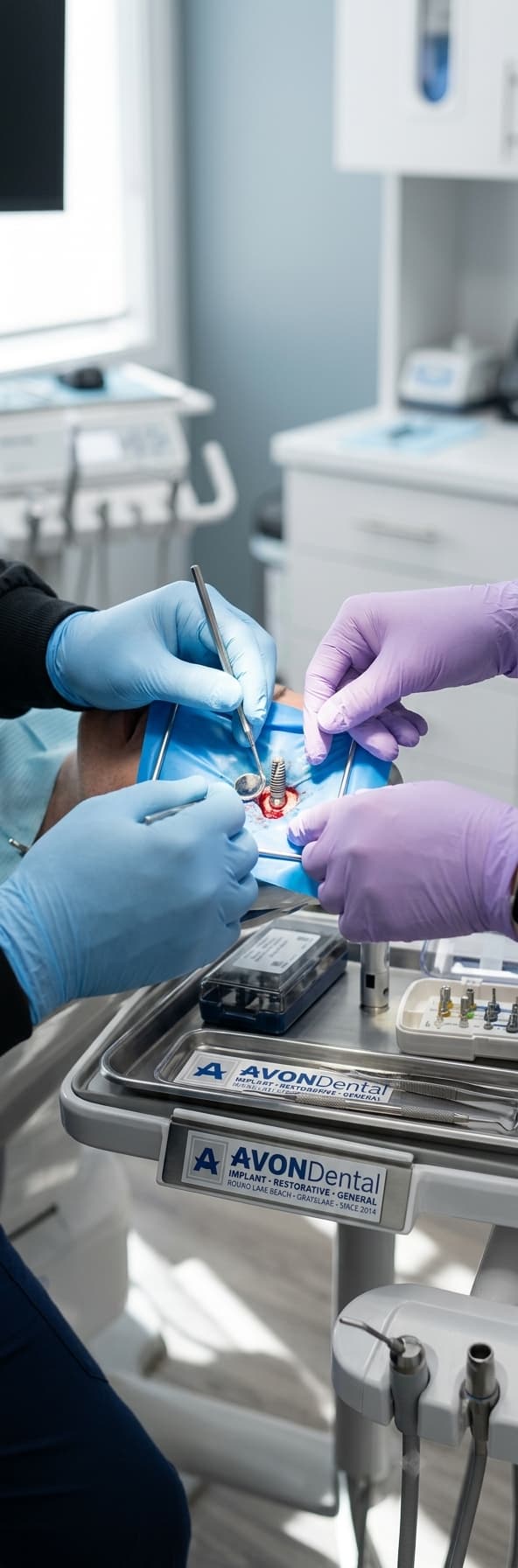
During a minor surgical procedure performed under local anesthesia (with sedation options available for anxious patients), the titanium implant post is placed into the jawbone. Many patients report less discomfort than expected — often comparable to or less intense than a tooth extraction.
Stage 4: Osseointegration
Over the following three to six months, the implant gradually fuses with the surrounding jawbone through osseointegration. This healing period is critical, as it creates the stable foundation that allows the implant to function like a natural tooth root for decades.
Stage 5: Abutment & Restoration Placement
Once osseointegration is complete, your dentist attaches the abutment and places your final custom crown, bridge, or denture. The restorative phase requires just as much precision and expertise as the surgical phase, since biomechanical factors — like bite alignment and force distribution — directly affect the longevity of your new tooth.
For All-on-4 and similar full-arch procedures, many patients receive a temporary fixed bridge on the same day as implant placement, allowing them to leave with a functional, natural-looking smile while healing takes place underneath.
Questions to Ask During Your Implant Consultation
Walking into your consultation prepared with the right questions helps you compare providers accurately and avoid unexpected costs down the road. Consider asking:
- What is included in your quoted implant price — the post, abutment, and crown, or just the surgical placement?
- Will I need any additional procedures, such as extractions, bone grafting, or a sinus lift, and how much will those add to the total cost?
- What brand and material of implant do you use, and why?
- How many implants have you personally placed, and what is your success rate?
- What does the payment schedule look like, and what financing options are available?
- What happens if a complication arises — is follow-up care included in the original price, or billed separately?
- How long is the expected timeline from consultation to final restoration?
- Do you offer any warranty or guarantee on the implant and restoration?
A dentist who welcomes these questions and answers them clearly and specifically — rather than deflecting to a vague estimate — is a strong sign that you're working with a transparent, trustworthy provider.
Dental Implants for Seniors: What to Know
Tooth loss becomes increasingly common with age, and many seniors assume dental implants simply aren't an option for them — whether due to age, bone density concerns, or existing health conditions. In reality, seniors are often excellent candidates for dental implants, and the benefits can be especially significant at this stage of life.
As we age, jawbone density naturally decreases, and long-term denture wear can accelerate that process. Because implants stimulate the jawbone the same way a natural tooth root does, they can help slow further bone loss — something no other tooth replacement option can offer. For seniors who have struggled with loose, uncomfortable dentures that shift while eating or speaking, implant-supported dentures in particular can be life-changing, providing dramatically improved stability, comfort, and chewing function.
Health conditions common in older adults — such as osteoporosis, diabetes, or heart disease — don't automatically disqualify a patient from implant treatment, but they do require careful evaluation and, in some cases, coordination with a patient's physician. Medications like certain osteoporosis drugs (bisphosphonates) can affect bone healing and should always be disclosed during your consultation. A thorough medical history review is an essential part of determining candidacy for any senior considering implants.
Financially, many seniors find that combining Medicare Advantage dental benefits (where available), supplemental dental insurance, and in-house financing options makes implant treatment considerably more accessible than expected. Because traditional Medicare typically does not cover routine dental care or implants, it's worth reviewing any supplemental dental coverage you may have, and discussing payment plan options directly with your dental office.
A Closer Look at Insurance: What Patients Often Get Wrong
Confusion about insurance coverage is one of the most common reasons patients either delay treatment unnecessarily or end up surprised by their final bill. A few clarifications can help set realistic expectations:
"My plan doesn't cover implants" doesn't mean nothing is covered. Even plans that exclude the implant fixture itself often still cover the diagnostic exam, X-rays, and sometimes the extraction or bone graft leading up to implant placement. It's worth asking your insurance provider for a full breakdown rather than assuming the entire treatment is excluded.
Annual maximums reset the value of phased treatment. If your plan has an annual maximum benefit, some patients choose to phase treatment across two calendar years — for example, completing an extraction and bone graft in December and the implant placement the following January — to maximize how much of the total cost their insurance can offset.
Medical insurance can sometimes apply. In cases where tooth loss results from an accident, injury, or a medical condition requiring extraction, your medical insurance (rather than dental insurance) may cover part of the associated procedures. This is worth investigating with both your dental office and your medical insurance provider if applicable.
Pre-treatment estimates prevent surprises. Before committing to treatment, ask your dental office to submit a pre-treatment estimate to your insurance company. While not a guarantee of final payment, it gives you a clear, written picture of your expected coverage and out-of-pocket responsibility before you begin.
Recovery and Aftercare
Mild swelling, bruising, and discomfort are normal in the days following implant surgery and are typically managed well with over-the-counter pain medication. Your dentist will provide specific aftercare instructions, which generally include:
- Sticking to soft foods for the first several days
- Avoiding smoking, which can significantly slow healing and increase the risk of implant failure
- Practicing gentle oral hygiene around the surgical site
- Attending all follow-up appointments to monitor healing
Once fully healed, dental implants are cared for much like natural teeth — regular brushing, flossing (using implant-safe floss, soft picks, or a water flosser), and routine dental checkups are the most important factors in long-term success.
Are Dental Implants Worth the Cost?
When you compare the sticker price of dental implants to a bridge or dentures, implants can look like the more expensive choice upfront. But when you factor in longevity, the picture often changes.
|
Tooth Replacement Option |
Typical Lifespan |
Key Considerations |
|
Dental implant |
20+ years, often a lifetime |
Preserves jawbone, functions like a natural tooth, highest upfront cost |
|
Traditional dental bridge |
7–10 years |
Requires reshaping adjacent teeth, doesn't prevent bone loss |
|
Removable partial or full denture |
5–7 years |
Lowest upfront cost, requires relines and eventual replacement, can shift or slip |
Over a 15–20 year period, patients who choose a bridge or denture often end up paying for multiple replacements, relines, and adjustments — expenses that can add up to a similar or even higher total cost than a single, well-placed implant. Implants also carry a documented success rate of around 95–98%, and because they preserve the jawbone, they help prevent the facial changes and further tooth loss that can follow untreated missing teeth.
For most patients, that combination of durability, function, and long-term value is what makes dental implants a worthwhile investment — even when the upfront cost is higher than the alternatives.
Dental Implants vs. Dentures vs. Bridges: Which Is Right for You?
Choosing the right tooth replacement option depends on your budget, the number of teeth you're replacing, your bone health, and your long-term goals.
- Choose a dental implant if: you're replacing one or a few teeth, want a permanent solution that doesn't affect neighboring teeth, and are looking for the closest possible match to a natural tooth in both look and function.
- Choose an implant-supported denture if: you're missing most or all of your teeth in an arch and want significantly more stability and chewing power than a traditional denture, at a lower cost than replacing every tooth individually.
- Choose a traditional bridge if: you have strong, healthy teeth on either side of the gap and want a non-surgical option, understanding that it will need replacement sooner and doesn't prevent jawbone loss.
- Choose removable dentures if: budget is your primary concern and you're comfortable with a removable appliance that will need periodic relines and eventual replacement.
Your dentist can help you weigh these trade-offs during your consultation, factoring in your oral health, budget, and long-term goals.
Am I a Candidate for Dental Implants?
Most healthy adults are good candidates for dental implants, but a few factors are worth discussing with your dentist:
- Adequate jawbone density to support the implant (or a willingness to undergo bone grafting if needed)
- Healthy gums, free from active, untreated periodontal disease
- Good overall health, since certain conditions like uncontrolled diabetes or specific autoimmune disorders can affect healing
- Non-smoking status, or a willingness to quit or significantly reduce smoking during the healing process, since tobacco use is one of the leading risk factors for implant failure
Patients who aren't immediate candidates due to bone loss or gum disease often become eligible after preparatory treatment, such as bone grafting or periodontal therapy. A thorough consultation — including a review of your medical history and detailed imaging — is the only reliable way to confirm candidacy.
Implant Materials and Brands: Does It Matter?
Not all dental implants are created equal, and understanding the basics of implant materials and brands can help you make sense of why prices vary so widely between providers.
Titanium remains the gold-standard material for dental implants, prized for its strength, biocompatibility, and decades-long track record of successful osseointegration. The vast majority of implants placed today, including at Avon Dental, use titanium or titanium alloy.
Zirconia is a newer, metal-free alternative that some patients prefer for its white color (versus titanium's gray tone, which can occasionally show through thin gum tissue) and for patients with metal sensitivities. Zirconia implants typically cost more than titanium and have a shorter long-term track record, though early results are promising.
Premium implant brands — such as Straumann, Nobel Biocare, and Zimmer Biomet — are backed by extensive clinical research, precise manufacturing tolerances, and a wide range of compatible components, which can command a higher price than value-tier alternatives. Many experienced implant dentists choose these established brands specifically because their long-term data and component availability reduce the risk of complications down the road — an important factor when you're investing in a restoration meant to last decades.
Value or generic implant systems can offer meaningful savings and, when properly manufactured and placed by a skilled dentist, can still deliver excellent results for many patients. The key differentiator often isn't the implant brand alone, but rather the dentist's training, experience, and use of proper diagnostic technology throughout treatment.
During your consultation, don't hesitate to ask which implant brand and crown material your dentist plans to use, and why. A confident, specific answer is a good sign that your treatment plan has been thoughtfully customized to your case rather than built around the cheapest available components.
Long-Term Maintenance: Protecting Your Investment
A dental implant is designed to last decades, but that longevity depends heavily on how well it's maintained after treatment is complete. Because implants represent a significant financial investment, protecting that investment through consistent care is one of the smartest things you can do.
Daily oral hygiene. Brush at least twice daily and floss around your implant crown just as you would a natural tooth. Implant-specific floss, soft interdental picks, or a water flosser can help clean effectively around the abutment and gumline without irritating the surrounding tissue.
Routine dental checkups. Regular exams and professional cleanings — typically every six months — allow your dentist to monitor the health of the tissue surrounding your implant and catch early signs of peri-implantitis (an inflammatory condition similar to gum disease that can affect the bone and tissue around an implant) before it progresses.
Avoiding excessive force. While implants are strong, habitually chewing ice, hard candy, or using your teeth to open packaging can damage the crown or, in rare cases, stress the implant itself.
Managing teeth grinding (bruxism). Patients who grind or clench their teeth at night should discuss a custom nightguard with their dentist, since excessive, repetitive force can shorten the lifespan of an implant restoration over time.
Avoiding tobacco use. Smoking significantly increases the risk of implant failure and peri-implantitis by restricting blood flow to the gum tissue and slowing healing. Patients who are able to quit or significantly reduce smoking around the time of treatment give their implants the best possible chance of long-term success.
With consistent care, most well-placed dental implants function beautifully for 20 years or more — in many cases, for life — making the ongoing cost of maintaining an implant far lower than the repeated adjustments, relines, and replacements required by other tooth replacement options.
Risks and Complications to Understand
Like any surgical procedure, dental implants carry some risk, though complications are uncommon when treatment is performed by an experienced provider. Potential risks include infection, implant failure due to insufficient osseointegration, nerve irritation, and, in upper-jaw cases, sinus involvement. Choosing a qualified, experienced implant dentist and following your aftercare instructions closely are the most effective ways to minimize these risks. Regular follow-up visits also allow your dentist to catch and address any concerns early, before they become more serious.
How Long Does the Entire Implant Process Take?
One of the most common questions patients ask after learning about cost is how long the entire process will take from start to finish. While every case is different, understanding the general timeline can help you plan both your schedule and your budget.
For a straightforward single-tooth implant with adequate existing bone, the process typically spans three to six months from initial placement to final restoration, broken into a handful of appointments: the consultation and imaging visit, the surgical placement visit, one or two healing check-ins, and the final abutment and crown placement.
Cases requiring bone grafting or a sinus lift add additional healing time before the implant itself can even be placed — often four to six months of extra healing, depending on the extent of the graft. While this can feel like a long wait, rushing implant placement before the bone has properly healed significantly increases the risk of implant failure, making patience one of the most cost-effective decisions you can make in the process.
Full-arch solutions like All-on-4 are often faster in one respect: many patients leave the surgical appointment the same day with a temporary fixed bridge already in place, restoring appearance and basic function immediately, even while osseointegration continues underneath over the following three to six months before the final, permanent restoration is placed.
Your dental team will map out a personalized timeline during your consultation, factoring in your specific bone health, the number of implants needed, and whether any preparatory procedures are required — so you know exactly what to expect at every stage, both clinically and financially.
How to Choose an Affordable, Trustworthy Implant Dentist
Cost matters, but it shouldn't be the only factor in your decision. Here's what to look for when comparing implant providers:
- Ask about experience. How many implants has the dentist placed, and what's their success rate?
- Request an itemized treatment plan. A trustworthy provider will clearly break down the cost of the implant, abutment, crown, and any preparatory procedures — not just quote a vague starting price.
- Confirm what's included. Does the quoted price include imaging, follow-up visits, and the final restoration, or only the surgical placement?
- Ask about financing and insurance verification. A good dental office will help you understand your insurance benefits and walk you through payment plan options.
- Read patient reviews. Look for reviews that specifically mention implant treatment, communication, and overall experience.
- Evaluate comfort and communication. A dentist who takes time to explain your options, answer questions, and involve you in treatment decisions is more likely to deliver a result you'll be happy with for decades to come.
Why Choose Avon Dental for Affordable Dental Implants?
At Avon Dental, our implant dentistry team brings over a decade of dedicated implant experience to every case, from single-tooth replacements to full-arch All-on-X restorations. We start every treatment plan with 3D cone beam scanning, giving us a detailed view of your bone density, nerve pathways, and soft tissue before we recommend a course of treatment — so you get an accurate, personalized plan rather than a generic price quote.
We understand that cost is one of the biggest concerns for patients considering implants, which is why we offer:
- A complimentary consultation to evaluate your candidacy and discuss your treatment options
- Transparent, itemized treatment planning so you know exactly what's included
- Flexible financing, including CareCredit and in-house payment plan options
- Acceptance of most major dental insurance plans, with help verifying your benefits
- Experienced implant dentists who handle every stage of treatment — from surgical placement through the final crown, bridge, or denture — for coordinated, consistent care
Whether you need a single implant to replace one missing tooth or a full-arch All-on-X solution, our Round Lake Beach and Grayslake, Illinois offices are here to help you restore your smile, your confidence, and your ability to eat and speak comfortably — without financial guesswork.


Frequently Asked Questions About Affordable Dental Implants
Common Questions About Tooth Clinic Answered
1. How much does a dental implant cost?
A single-tooth dental implant typically costs between $3,000 and $6,000, including the implant post, abutment, and custom crown. The exact price depends on factors like the number of teeth being replaced, whether bone grafting is needed, the implant material used, and your dentist's experience. Full-arch solutions like All-on-4 generally range from $24,000 to $35,000 per arch but can be more cost-effective per tooth than replacing each one individually. The most accurate way to get a price is through an in-person consultation and imaging, since implant costs vary significantly based on your specific case
2. What is the cheapest way to get dental implants?
The most effective ways to lower the cost of dental implants include comparing itemized treatment plans from multiple providers, using in-house payment plans or third-party financing like CareCredit, asking about multi-implant discounts, and considering an implant-supported denture instead of replacing every tooth individually. Dental school clinics can also offer 30–50% savings for patients willing to accept a longer treatment timeline. Mini dental implants may be a lower-cost option for patients stabilizing a denture, though they aren't suitable for every situation. Comparing options carefully — rather than choosing based on price alone — helps ensure you get both affordability and quality care.
3. Does dental insurance cover the cost of dental implants?
Most basic dental insurance plans offer limited or no coverage for dental implants, since they've historically been classified as an elective procedure. However, many PPO plans now offer partial coverage — often 20–50% of the cost — subject to an annual maximum benefit, and implants deemed medically necessary (such as those needed after an accident or injury) may qualify for additional coverage. Even when the implant itself isn't covered, your consultation, X-rays, and portions of preparatory treatment like extractions are often included under standard dental benefits. Requesting a pre-treatment estimate from your insurance provider is the best way to understand your specific coverage before beginning treatment.
4. Are mini dental implants a cheaper alternative to regular implants?
Yes — mini dental implants are narrower than standard implants and typically cost roughly half as much, often because they require less invasive surgery and can frequently be placed without bone grafting. They're commonly used to stabilize a lower denture or replace smaller teeth in narrow spaces. However, mini implants aren't appropriate for every case, particularly where maximum strength and durability are required, such as replacing a molar under heavy chewing pressure. Your dentist can evaluate your bone density and treatment goals to determine whether mini implants or standard implants are the better fit.
5. How long do dental implants last, and are they worth the investment?
With proper care, dental implants can last 20 years or longer — often a lifetime — making them significantly more durable than dental bridges (typically 7–10 years) or dentures (typically 5–7 years). While the upfront cost of implants is higher than these alternatives, their longevity often makes them more cost-effective over time, since bridges and dentures usually require multiple replacements and adjustments over the same period. Implants also preserve jawbone density and function more like natural teeth, which is why most dental professionals consider them the gold-standard, long-term solution for missing teeth.
Schedule Your Appointment
Get in Touch for Comfortable and Personalized Dental Care
Get started on a healthier, more confident smile with Avon Dental. Call 847.740.4600 or fill out our contact form to schedule your visit today!